We are currently experiencing intermittent phone issues. If you are unable to reach us by phone, please email us at info@enttx.com and include your phone number so that a representative can reach out.
Our name is changing! Learn more about The Centers for Advanced ENT Care >>
At The ENT & Allergy Centers of Texas, we diagnose types of head and neck cancers which includes location, size, causes, and symptoms. Based on these factors and more, we provide appropriate treatment options.
Head and neck cancers are those that grow in and around the mouth, nose and sinuses, throat, and larynx. Most of these tumors are squamous cell carcinomas that develop in the mucosal lining of these areas. Although they can spread to the lymph nodes, early detection can lead to successful treatment.
Head and neck cancers are categorized based on the specific location in the body where they develop. They include:
Also known as the voice box, this is a tube-shaped organ in the neck containing the vocal cords. It helps us speak, swallow, and breathe.
This includes the lips, tongue, gums, and mouth.
These glands produce saliva to keep food moist and help break it down.
This hollow tube begins behind the nose and leads to the esophagus and trachea.
These are the hollow spaces in the bones around the nose, where air passes on the way to the throat.
Other cancers can form in this part of the body (brain tumors, esophageal cancer, thyroid cancer, etc.) but these behave very differently and are not classified as head and neck cancers.
The primary risk factors associated with head and neck cancers are tobacco usage (including both smoking and chewing tobacco) and alcohol consumption, particularly when used in combination. Additional risk factors include exposure to industrial toxins such as wood, dust, and paint fumes, poor oral hygiene, and infections caused by human papillomavirus and Epstein-Barr virus. Asbestos exposure, and radiation exposure are also known to be contributing factors.
Symptoms of head and neck cancers can be mistaken for those of other ailments and may not initially appear severe. Indications to look out for include an enduring lump or sore, persistent sore throat, difficulty swallowing, and hoarseness.
It’s also crucial to be aware of additional symptoms that may emerge, such as mouth bleeding, jaw swelling, recurrent congestion, headaches, earaches, facial numbness or paralysis, enlarged lymph nodes, and unexplained weight loss.
Treatment depends upon several factors. The size and location of the tumor, its stage, your age and health must all be taken into consideration. Our team at The ENT & Allergy Centers of Texas will make a decision based on these unique factors. Options might include surgery, radiation therapy, chemotherapy, targeted therapy, or a combination of the above.
A number of masses may develop in your head or neck; these masses may also be called growths, tumors, lumps, or bumps. While some head and neck masses are cancerous, many are not. It is important to see a physician if any abnormal bump or lump persists for more than two weeks. If cancer is present, early detection provides the highest chance of successful treatment.
There are numerous reasons for a head and neck mass :
This is the most common cause of new neck masses. Lymph nodes, which are part of the immune system, can enlarge when the body rallies to fight an infection. When the infection recedes, lymph swelling subsides as well.
Benign masses do not spread to surrounding tissue and are not cancerous. Nevertheless, benign masses can be serious if they impact nerves or exert pressure in the head and neck and are often removed surgically. These include cysts, thyroid masses, vascular masses, salivary gland masses, and others.
When head and neck masses are malignant, they can spread to surrounding tissue or to other parts of the body. In the head and neck, tumors may be either primary or secondary.
Primary tumors originate in the head or neck itself, including the thyroid, throat, larynx, salivary gland, brain, or other locations. Primary tumors of the head and neck typically spread to the lymph nodes in the neck.
Many primary head and neck cancers are caused by tobacco and alcohol use. People who have been exposed to radiation, either during medical treatments as children (common in decades past) or from nuclear radiation sources, are at considerable risk for thyroid cancer and should be screened.
Secondary cancers are tumors that have spread from primary tumors in other parts of the body to the head or neck. Most often, secondary tumors of the neck originate in the lung, breast, kidney, or from skin cancers (squamous cell carcinoma or melanoma).

You should see a member of our ENT physician team if you experience any of the following symptoms:
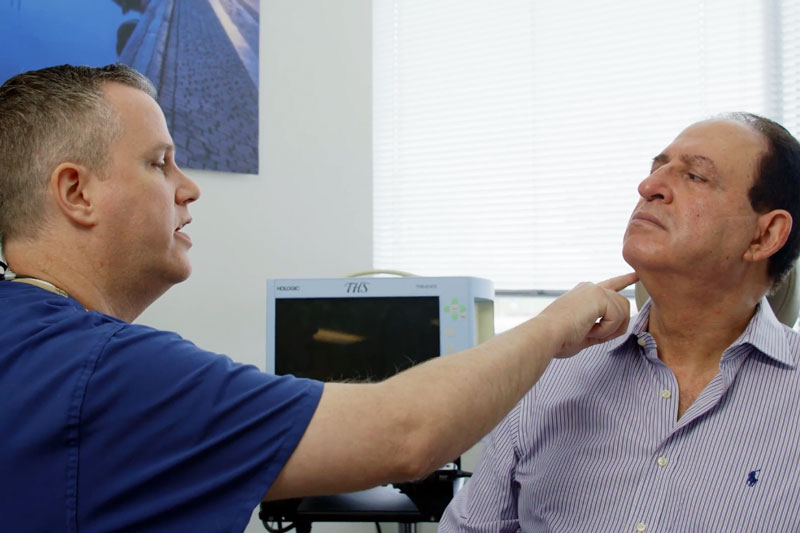
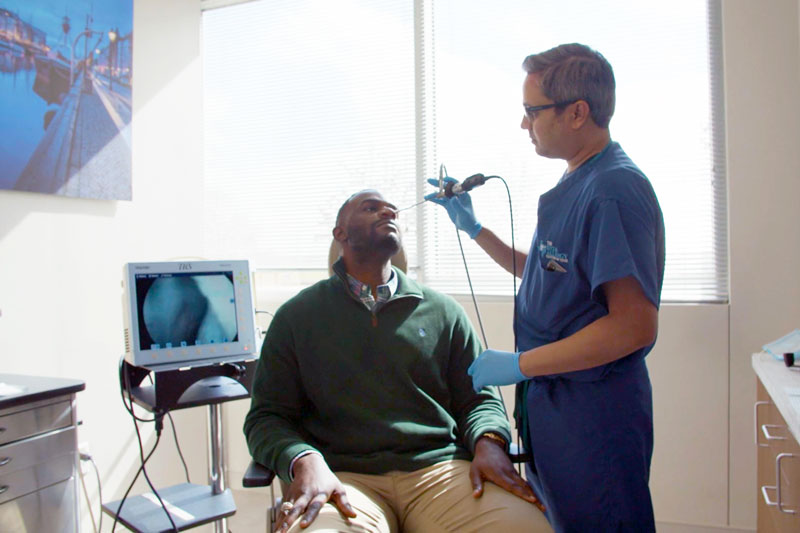
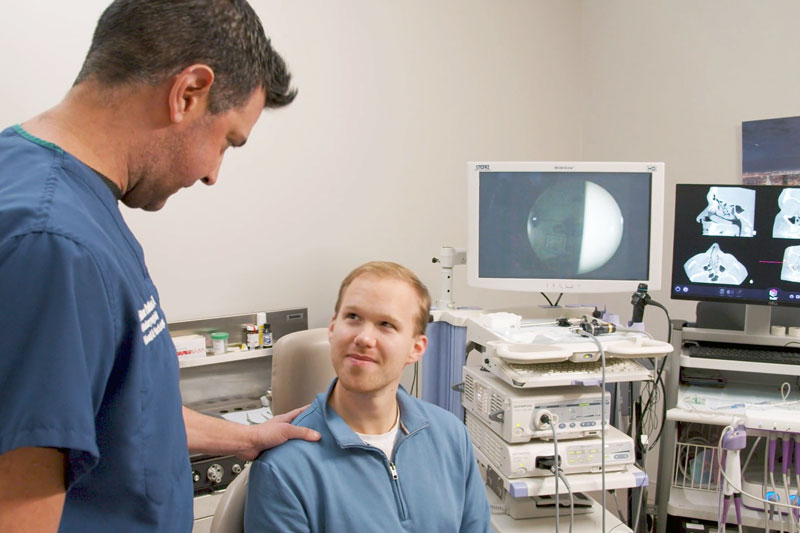
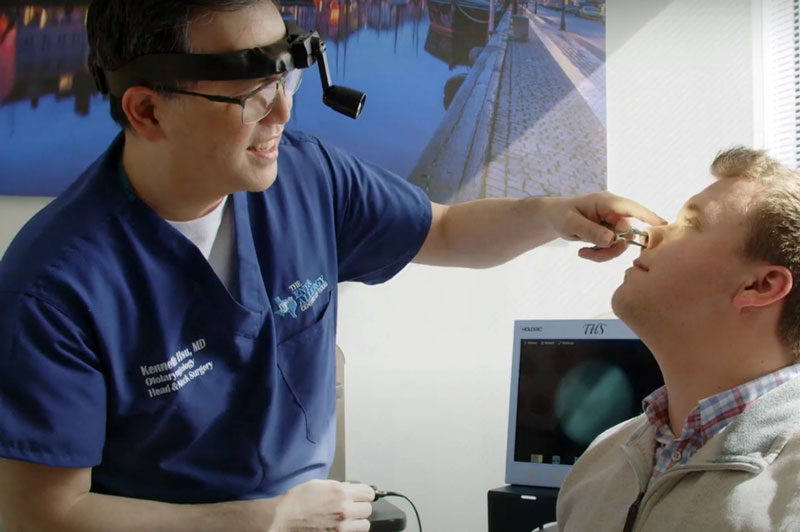
A simple physical examination in-office of some masses may allow a physician to determine their cause based on location, size, and consistency. In other cases, additional tests may be required. These tests include the following:
A sample of tissue is taken and examined under a microscope to determine if it is malignant.
Computed Tomography combines a sophisticated x-ray with computer technology. A CT Scan can help locate tumors, determine their type or size , detect surrounding swelling or bleeding, and evaluate the next steps for treatments. Injections of an iodine dye contrast material are often used to enhance the visibility of abnormal tissue during CT scans.
Magnetic Resonance Imaging can clearly show smaller tumors and brainstem masses. It uses a magnetic field rather than x-ray radiation.
PET (Positron Emission Tomography) and SPECT (Single Photon Emission Tomography): These tests are useful after treatment of head and neck cancer to distinguish between cancer and dead scar tissue. They involve injections with a radioactive tracer.
Treatments are determined by the cause of the mass. Benign neck cysts and masses are usually removed by surgical excision. Head and neck cancers may be treated by some combination of radiation therapy, chemotherapy, and surgery, depending on their nature.
If you’re concerned about head and neck masses or cancers, speak with your ENT doctor. Early detection and treatment can increase the chances of successful outcomes. Contact a member of The ENT & Allergy Centers of Texas team today to schedule an appointment at any of our 8 North Texas clinic locations.
Best of Carrollton
Living Magazine
Texas Monthly
D Best
D Best
Star Local Media